

Animal vs. Plant Protein: Which One Wins—or Is That the Wrong Question?
Exploring amino acids, absorption, the bigger picture behind protein quality, and free nutrition tools.
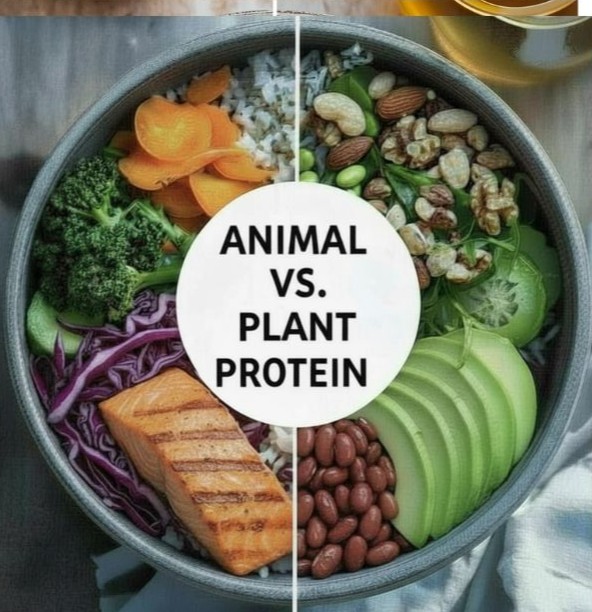
Nutrition headlines love a good heavyweight boxing match, and right now, the ultimate card dominating the wellness space is Animal vs. Plant Protein. If you’ve been scrolling through fitness fads lately, you’ve probably seen no shortage of strong opinions about protein, with animal and plant sources each getting praised or criticized.
But when we step out of the fitness rumor mill and look at actual physiology, the biological blueprint is far more nuanced—and reassuring for both sides of the street. Digestibility isn’t an all-or-nothing game; it sits on a wide, highly adaptive spectrum that helps folks thrive regardless of where they get their protein. The bigger picture is far more flexible—and far more interesting—than the usual protein debate suggests.
Of course, what I’m about to share should not be taken as absolute, because nutrition science is always evolving and individual bodies can respond differently. If there’s one thing nutrition science does well, it’s keeping us humble. For this blog, I’m focusing on whole foods and protein powders rather than every possible protein product. But based on what we understand at this point, here’s a look at how that biological blueprint typically plays out behind the scenes for both plant and animal protein. And because there are often more questions when it comes to plant proteins, I’ll expand on that a little more.
What is a Protein?
Before we dive into the nitty-gritty of what high-quality protein means, absorption rates, and free nutrition tools that could be helpful, let’s answer the ultimate question: what exactly is a protein?
Proteins are made from smaller building blocks called amino acids. A simple way to picture them is like Legos: one amino acid by itself is just a single block, but when many are put together in the right order, they form a protein.
There are 20 amino acids (Legos) in total. Your body can make 11 of them on its own, but the other 9 have to come from food. Those 9 are called essential amino acids. When a food—or a combination of foods—contains all 9 essential amino acids, it is called a complete protein.
Why do we care about a complete protein anyway? Because your body is basically running a nonstop construction crew. Those amino acids help support some big jobs: repairing muscle tissue, making neurotransmitters that help regulate mood, building antibodies for immune defense, creating collagen for joints and connective tissue, and producing hormones involved in metabolism, along with many other essential functions.
And that is where the great protein puzzle begins—so let’s peek behind the scenes and see how it all comes together.
Rethinking “Higher Quality Protein”
The phrase “higher quality protein” sometimes gets lost in translation, especially in fitness spaces. In nutrition science, it usually refers to two things: amino acid profile and digestibility. In other words, it looks at whether a protein provides all nine essential amino acids (EAAs) in adequate amounts and how many of those amino acids become available for the body to absorb and use. For years, we used to look at a metric called PDCAAS (Protein Digestibility-Corrected Amino Acid Score) to determine this. However, nutrition science has evolved, and the modern standard recommended by the FAO is the DIAAS (Digestible Indispensable Amino Acid Score) [8]. This updated framework provides a much more accurate picture by tracking exactly how efficiently a protein is broken down and absorbed in the small intestine rather than the standard stool tests of the past.
The Lentil Example: Standalone Score vs. Total Absorption
To understand how the DIAAS system works, look at a common staple like cooked lentils. To make this easier to understand, it helps to think of DIAAS as looking at two related questions:
- How much protein is digested and absorbed? Your gut is incredibly efficient here—it successfully absorbs about 85% of the total protein in lentils.
- Which essential amino acid is limiting? On paper, lentil protein may score around ~55% on DIAAS, depending on the data set and reference pattern used. This drop happens strictly because lentils are low in one essential amino acid (methionine). Because the final score is judged by its weakest link, the number looks low.
Takeaway: Your body doesn’t waste the rest of that protein! In the real world, you don’t eat lentils completely isolated. Simply pairing them with grains or seeds across the day bridges that amino acid gap beautifully, supplying the missing pieces and supporting a stronger overall muscle-building amino acid profile. Think of it like teamwork in your amino acid pool: grains or seeds help bring more methionine to the mix, while lentils bring more lysine. Together, they help create a more balanced overall profile.
Does “higher quality” mean it is healthier? While that scoring is helpful to know, it is also important to remember that it does not automatically tell us whether one whole food is healthier than another, because that depends on the full nutrient package that comes with it. Protein quality is not the same thing as the overall quality of the food—it does not capture things like nutrient density, degree of processing, sourcing, or what else the food brings along with it. For example, an organic grass-fed steak and a conventional steak would generally both count as high-quality protein in terms of amino acid completeness and digestibility, even though they may still differ in health-related factors like fatty acid profile, micronutrient variation, farming practices, and environmental impact. The same idea applies to plant protein: a minimally processed or unprocessed source may offer fiber, vitamins, minerals, and protective plant compounds that support health in a very different way than a heavily processed plant-based protein product that is technically high in protein but also comes loaded with excess sodium, additives, refined oils, or sugars.
Will our body sort protein into “plant” and “animal” categories? Once protein is digested, your cells are working with the same basic building blocks—a shared amino acid pool [3]. From your cells’ point of view, an amino acid (Lego block) from a steak and one from a bowl of black beans are chemically identical. What changes between food sources is not the identity of the amino acids themselves, but their concentration profile and bioavailability—how easily your digestive system can unlock them. For instance, fish may score higher for quick digestibility and amino acid completeness, while a whole food like beans may score lower because natural fiber slows absorption and their amino acid profile is lower in certain essential amino acids. But lower isn’t the same as worse—it’s simply useful information. It provides a helpful guide showing us that pairing those beans with a complementary food, like rice, helps bridge the gaps in their respective amino acid profiles and create a more complete balance of all nine essential amino acids.
To see exactly how these differences look in action, let’s dive into the real-world absorption rates for both kingdoms below.
Protein Absorption at a Glance
When researchers measure how much protein the body can use, they often look at real ileal digestibility [1]—a precise measurement of how much protein is absorbed in the small intestine before it reaches the colon. When we look at the data through this lens, we find that neither kingdom is a monolith; both animal and plant proteins sit on their own highly specialized spectrums. It’s important to consider that higher absorption does not always equal broader health benefits.
The Animal Kingdom Spectrum: Connective Tissue & Matrices
- Dairy Liquids & Refined Isolates (Whey/Casein): These sit at the pinnacle of total absorption, often reaching 95% to 99% efficiency. However, they tell two completely different stories when it comes to speed. Whey is a fast-acting protein that rapidly floods the bloodstream with amino acids, making it a go-to for immediate post-workout recovery. Casein, on the other hand, is the ultimate slow-release protein. Because it clots into a temporary gel matrix when it hits stomach acid, your enzymes have to break it down at a slow, steady trickle over several hours.
- Seafood & Fish (e.g., Pollock, Cod, Salmon): Fish protein is generally very easy for the human digestive tract to break down, typically hitting 91% to 95% efficiency. This is because fish have significantly less tough connective tissue (collagen) than land animals—which is why fish flake apart so easily when cooked! Your gut doesn’t have to work nearly as hard to unlock its aminos.
- Whole Eggs: A classic benchmark for whole-food animal-based bioavailability. Eggs hover right around 91% to 97% efficiency. They are incredibly bioavailable because the protein is bound in a simple, highly accessible cellular structure that requires minimal enzymatic heavy-lifting.
- Land-Based Dense Meats (Beef, Pork, Chicken): Whole muscle meats sit around 89% to 94% digestibility. While packed with protein, they come with a denser matrix of cross-linked collagen fibers and fat boundaries. Cooking them properly denatures these proteins to help our enzymes get in, but the gut still expends more digestive energy breaking down a steak than it does a piece of fish or an egg.
The Plant Kingdom Spectrum: Fiber Boundaries & Isolates
- Plant-Based Isolates (Soy/Pea Isolate): Here is a fascinating plot twist: because the natural fiber is stripped away during processing, research suggests that isolates (found in protein powder products, etc.) match animal rates at 91% to 94%! It’s virtually neck-and-neck with eggs and beef, which usually blows people’s minds. Whole plants contain fiber that slows down protein absorption, but when processed into an isolate, that barrier is removed. In human research, pea protein isolate has been shown to reach a 93.6% absorption rate, making it comparable to milk protein in that study, while soy isolate can reach over 91% [2].
- The Plant-Protein Powder Super-Blend: Because of this high baseline, if someone is hunting for a protein powder, looking for an ideal blend ratio (usually 70% pea, 30% rice) is spot on. A 2014 study by Purpura demonstrated that the amino acid leucine from rice protein actually hits the bloodstream faster than whey [4]. Furthermore, the famous 2013 Joy study [5] showed that taking rice protein builds the exact same amount of muscle thickness and strength as whey protein over 8 weeks of lifting. A combo of pea and rice is ideal for plant-based power. The catch is that relying 100% on rice protein isn’t ideal because it’s low in the amino acid lysine. Meanwhile, pea protein is a bit slower but lacks methionine. When blended together in a 70/30 ratio, they complement each other’s amino acid gaps perfectly. This creates a plant-based option that is high in leucine, which is the absolute driver for muscle synthesis, making the blend functionally identical to whey.
- Whole Legumes & Grains (Chickpeas, Lentils, Oats): These whole foods sit comfortably between 72% and 88% digestibility due to the intact healthy fiber matrix. If someone eats a plant meal with 20g of protein, reaching a similar absorbed-protein target does not require a dietary overhaul—it may just take a few extra bites. Let’s look at the conservative math: 20g of lentil protein at an 80% baseline equals about 16g absorbed. By adding roughly 5g more protein from the same type of food at that same 80% rate, you add about 4g absorbed, bringing the total closer to 20g. As we learned earlier, pairing lentils with grains and/or seeds can help round out the amino acid profile. And depending on the pairing, your overall protein target, and how your meals are spaced throughout the day, you may not need to increase the portion much—or at all. I’ll explain more later in the blog.
- Raw, Unprocessed Seeds & Nuts: This is where the lower numbers live, averaging around 52% to 74% efficiency.
How the Gut Adapts to Help You Absorb Plant Protein: Clinical studies suggest that when you eat a long-term, plant-forward diet, your gut bacteria can adapt. Your microbial profile may shift toward a greater abundance of beneficial, fiber-loving species like Bifidobacterium and Lactobacillus [7].
These bacteria are helpful at breaking down complex plant structures and may contribute to nitrogen recycling in the gut. While human protein absorption primarily takes place early on in the small intestine, a plant-adapted microbiome may support the broader gut environment and help break down fibrous plant material that reaches the colon. This adaptation may help support better access to, and use of, plant-based nutrients over time.
(Note: Because these proteins are tucked away so securely, absorption can be influenced by how thoroughly you chew your food. Chewing acts as the first phase of manual demolition, breaking those cell walls down early so your enzymes can do their job easily!)
The App Hack, the Internal Pool, and the Plate Goal
Go-to apps like MyFitnessPal or Lose It! can be very helpful for tracking total protein grams, especially for animal-based proteins and reasonably well for plant-forward diets. But because they do not break protein down into individual amino acids (those Legos), they may not fully reflect how different plant foods contribute to a more complete amino acid profile across the day.
The Cronometer app can be a helpful spot-check tool for plant-forward eaters (or any diet). Unlike many other apps, it tracks all nine essential amino acids individually and also captures a wide range of micronutrients. When you log different plant foods—including foods people may not immediately think of as contributing amino acids, like spinach or mushrooms (not that those should be the primary protein focus)—it pools those amino acids across the day and shows when you’ve reached a more complete essential amino acid profile overall. Every little bit helps build the bigger picture.
App Disclaimer: If your relationship with food feels shaky, these tools may not be the best fit right now. If you need support rebuilding trust with food first, reaching out to a healthcare professional or therapist may be the most supportive first step. These tools can be helpful for periodic check-ins, but no app is 100% accurate. Human biology is far too complex to reduce to an exact decimal, and apps can only track static input—they cannot capture real-time absorption, biological variation, or true metabolic outcomes. They are informational tools, not a replacement for professional care. If you are concerned about a true nutrient deficiency, working with a qualified practitioner and considering functional lab testing may be more appropriate.
The Bigger Picture: Flexibility Over Perfection
The ultimate goal for all of us—regardless of dietary preference—is to aim for well-balanced, nourishing meals with appropriate protein intake. Human metabolism is highly adaptive. If a single meal slips during a chaotic day, or a plant-based dish doesn’t provide all nine essential amino acids in one sitting, your body has some built-in flexibility.
Take the human body’s built-in efficiency as one example: our systems maintain a dynamic internal amino acid pool through ongoing protein turnover. The body can draw from that reserve to help bridge short-term gaps, but it still depends on regular dietary intake to keep the system running well over time.
The rigid rule that plant proteins must be perfectly paired at every single meal has had a long cultural shelf life, even though modern nutrition science has moved on. That idea was popularized in the 1970s text Diet for a Small Planet, but the author explicitly corrected that strict, same-meal messaging in the book’s 1981 anniversary edition [6].
Today, nutrition science generally places more emphasis on getting all your essential amino acids across the full day rather than making every single meal perfectly complete. If one meal does not provide all nine essential amino acids, another snack later in the day may help fill in the gaps. While building balanced meals is still an encouraged habit, from time to time it’s okay if not every plate is perfectly orchestrated. “Incomplete” does not mean “not useful”—it simply means that different plant foods can complement one another over the course of the day.
The Final Verdict: Which Wins?
At the end of the day, the answer is beautifully nuanced. We are complex, adaptive beings, and your metabolism essentially functions like a massive internal Lego storage bin. When you eat, your body isn’t reading a protein label and sorting amino acids into “plant” or “animal” categories. It’s breaking protein down into individual amino acids (bricks) and pulling from that shared pool to build what it needs. Chemically speaking, an amino acid brick is an amino acid brick, whether it came from a plant or an animal. Neither source is automatically “better” in every context; what matters is the full pattern of foods, portions, and needs.
Whether you lean toward animal protein, plant protein, or a thoughtful combination of both, it is entirely possible to thrive. Just focus on how you want to stock your bin.
Thriving isn’t about rigidly picking one side of the street or forcing yourself into a diet that makes you miserable. There are always deeper nuances to explore—like which foods make you feel your best and align with your broader health or moral needs. Or how classic pairings (think hummus on whole-grain pita, which together provide all nine essential amino acids) and standalone stars (like soy, quinoa, chia, eggs, fish, and poultry, which already qualify as complete proteins) fit into the bigger protein puzzle.
What matters most is eating a wide range of nourishing whole foods, meeting your total daily energy needs, and adjusting your overall protein intake—and, when relevant, your protein timing—to fit your body, age, activity level, health goals, and whether muscle growth or athletic performance is a priority.
Remember to listen to how your body responds and never hesitate to seek guidance from a qualified practitioner whenever you need extra support.
Free Nutrition Guide Tools
Precision Nutrition offers a free macro calculator and guide that estimates your daily intake needs—including calories, macronutrients, and hand-sized food portions—based on your individual goals. It provides a general, flexible nutrition framework that can help you structure meals around your preferred way of eating. The tool adapts easily to a variety of dietary preferences, including plant-based, paleo, Mediterranean, and others, and can support goals like body recomposition, gaining muscle/weight, or improving health. This framework can also serve as a helpful educational companion to a tracking app like Cronometer for those who want to monitor their daily intake. https://www.precisionnutrition.com/nutrition-calculator
Free nutrition tool disclaimer: The resources and frameworks shared here are for general educational and coaching purposes to help you build healthy habits. Prescribed dietary plans intended to treat specific medical needs or health conditions should always be managed by a registered dietitian or other qualified medical practitioner.
Beyond the Protein Conversation: One Crucial Consideration
One crucial consideration for any plant-forward lifestyle—and sometimes regardless of diet—is ensuring adequate vitamin B12 intake. Our bodies do not make vitamin B12, so it must come from food, fortified foods, or supplements. Low B12 levels can lead to serious health consequences over time, including neurologic problems and some forms of anemia, which is why this nutrient deserves close attention. While B12 is especially important for vegans to supplement, it is also worth discussing with a healthcare provider for other diets, since absorption can become more difficult with age and some people may still fall short even when animal products are part of the diet. Because individual absorption and dosage needs can vary widely, targeted guidance from a qualified healthcare professional can help ensure all nutritional bases are safely covered.
Side note: To be fully transparent, dairy is not something I personally prioritize in my own approach to a holistically supportive lifestyle. That said, there is absolutely no judgment from me if it is part of someone’s routine. Including those absorption details above still matters for understanding the full metabolic picture. It is also a helpful reminder that higher absorption does not automatically equal broader health benefits. If you’re curious about why I personally take that stance on dairy, you can explore that more in my related article. https://aj-macomber.com/2026/03/01/a-common-food-staple-contributing-to-weight-gain-parkinsons-ms-cancer-alzheimers-hormone-issues-and-bad-cholesterol/
References
- [1] Gaudichon, C., & Calvez, J. (2021). Gut amino acid absorption in humans: Concepts and relevance for postprandial metabolism. Current Opinion in Clinical Nutrition & Metabolic Care, 24(1), 45-51.
- [2] Guillin, F. M., et al. (2022). Real ileal amino acid digestibility of pea protein compared to casein in healthy humans: a randomized trial. The American Journal of Clinical Nutrition, 115(2), 353–363.
- [3] Wu, G. (2009). Amino acids: metabolism, functions, and nutrition. Amino Acids, 37(1), 1-17.
- [4] Purpura, M., et al. (2014). A Comparison of Blood Amino Acid Concentrations Following Ingestion of Rice and Whey Protein Isolate: A Double-Blind Crossover Study. Journal of Nutrition and Health Sciences, 1(3), 306.
- [5] Joy, J. M., et al. (2013). The effects of 8 weeks of whey or rice protein supplementation on body composition and exercise performance. Nutrition Journal, 12(1), 86.
- [6] Lappé, F. M. (1981). Diet for a Small Planet (10th Anniversary Ed.). Ballantine Books.
- [7] Maczkiewicz, M., et al. (2024). Interactions Between Plant Proteins and Gut Microbiota as Determinants of Intestinal Health. Nutrients.
- [8] FAO/WHO Expert Consultation. (2013). Dietary protein quality evaluation in human nutrition. FAO Food and Nutrition Paper, 92. Rome: Food and Agriculture Organization of the United Nations.
Disclaimer: AJ Macomber is not a Medical Doctor, Practitioner, or a Licensed Registered Dietitian. AJM is not here for medical diagnostics, treatment procedures or nutrition therapy. AJM attains a Holistic Nutritionist and Sports Nutrition Certifications from a Credentialing Organization called The American Fitness Professionals & Associates. Recipients should seek medical advice and be closely monitored by their physician, functional doctor, or licensed healthcare professional, before starting or continuing any lifestyle changes such as but not limited to dietary changes, supplement changes, or physical activity changes, especially if you are pregnant or have any pre-existing injuries or medical conditions. You should read any information provided by the product manufacturer and/or any product labels or packaging prior to using any medication, nutritional, herbal, food, homeopathic and/or other products. Certain medications may have contraindications with introducing or continuing any supplemental or dietary changes, and that medication(s) may need adjustments before and/or during your lifestyle changes. Adverse effects may lead to permanent damage or death if your medication(s) and/or healthcare needs are not properly monitored and amended between you and your physician. Nutritional or supplemental suggestions including information that may be provided directly or by linking to a third-party, or any affiliates, are intended for your general nutrition-related information and general education only and will not be held accountable for the use or misuse of any suggestions described therein. Please note that, over time, the currency and completeness of the information may change. These services or information provided do not promise or guarantee protection from past, present, or future illnesses and it should not be construed as dispensing medical advice or claiming to diagnose, treat, prevent, mitigate, prescribe, or cure any diseases, conditions, mental or physical, real, or imaginary and that it is not a substitute for regular medical or psychological care. It is extremely important that you listen to your body with physical activity, use common sense, take breaks, and hydrate as needed to avoid injury and help decrease the chances of serious medical conditions, such as rhabdomyolysis. Rhabdomyolysis is a rare but potentially lethal threat impacting people who have not let their muscles adapt to difficult workouts. This is typically those that are pushing themselves too hard in the beginning. Only you and your doctor know if you are in sufficient physical condition to safely perform any exercises. If you feel at any time you are exercising beyond your current fitness abilities, or you feel any discomfort, pain, dizziness, or nausea, you should discontinue the exercise immediately.The use of any information provided in these documents is solely at your own risk and the information provided should not to be taken as absolute.